Portfolio
Human Factors Program

eLearning
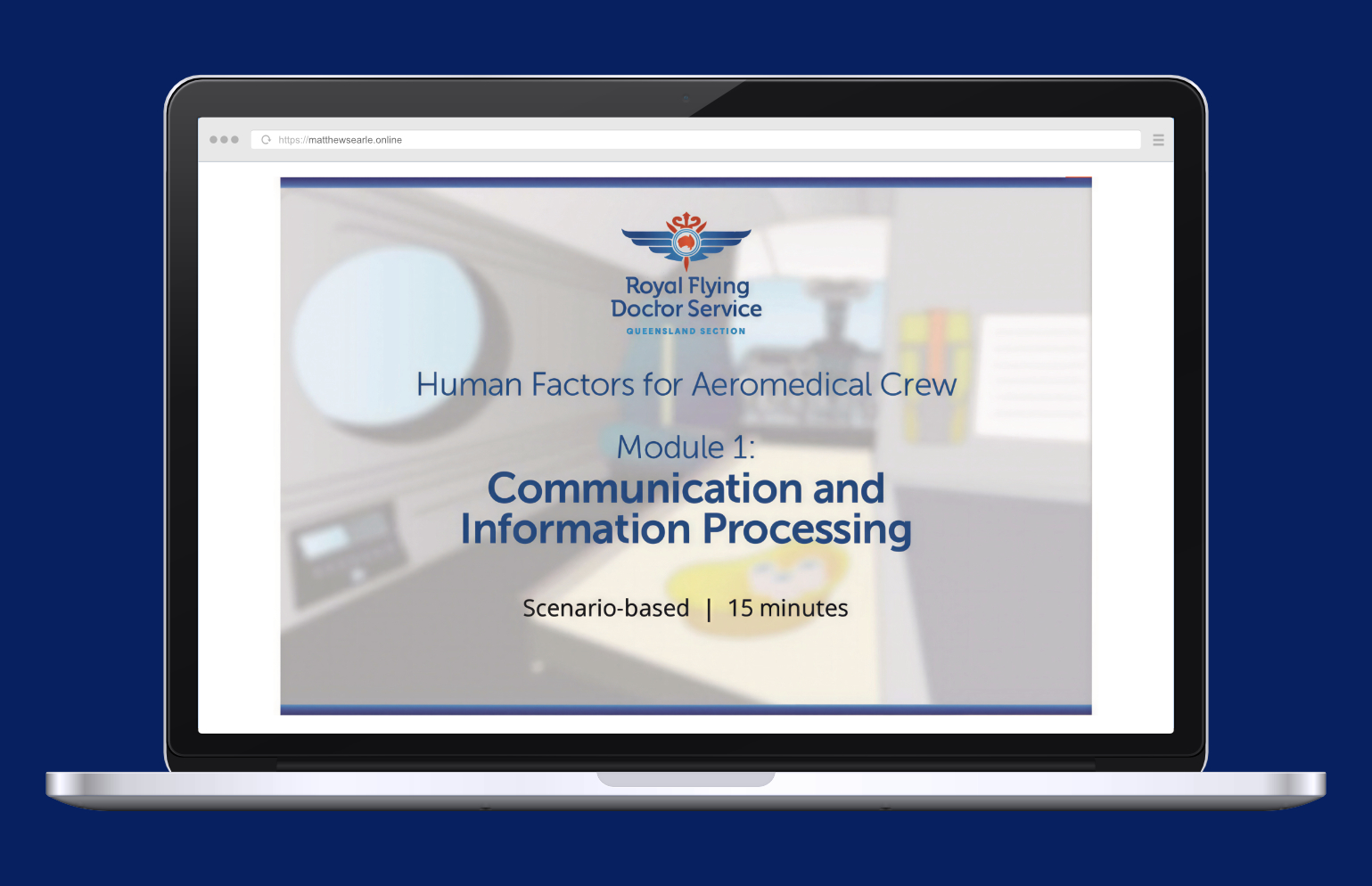
A seven-module self-paced program saving the RFDS significant cost compared to the lengthy in-person format.
7
modules
40
scenarios
16K
in savings/year
About the project
The Brief
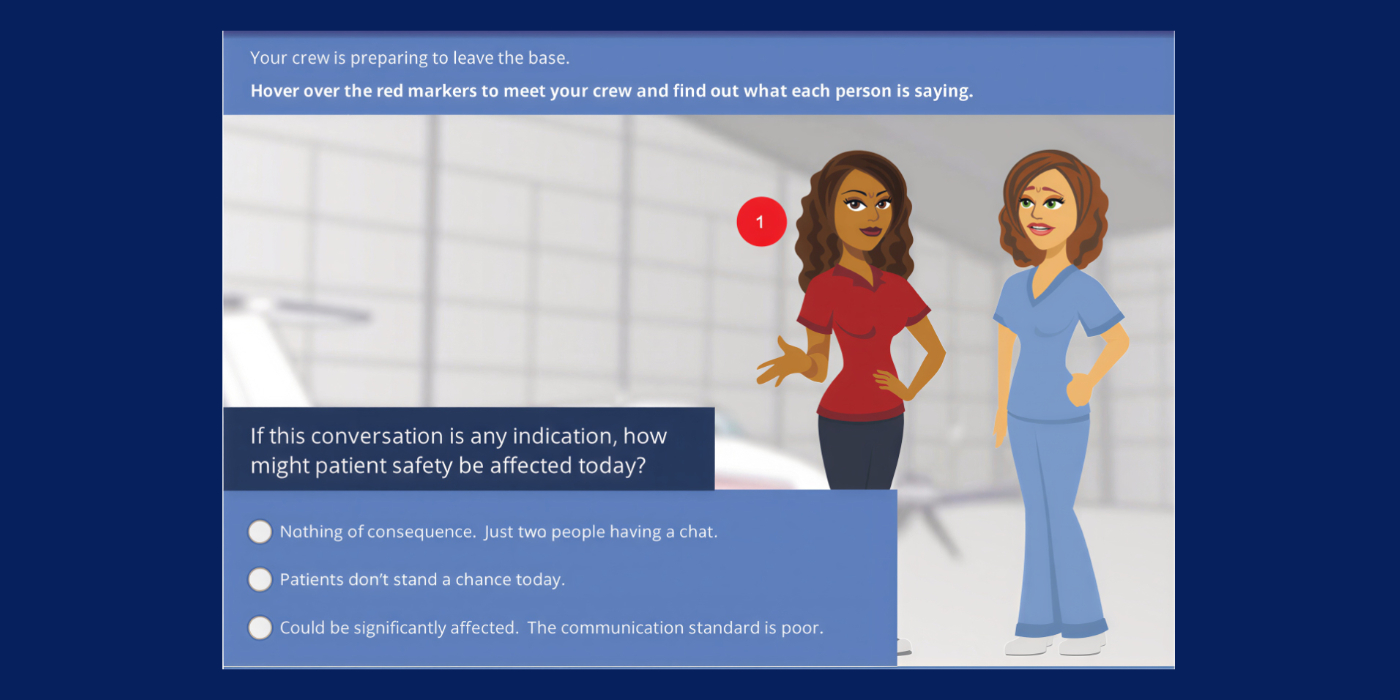
Human Factors (aka ‘Non Technical Skills’) is a significant risk area for the RFDS. The ability for multi-disciplinary frontline staff to work safely and efficiently in a challenging environment is fundamental to patient safety and operational performance.
When I arrived at the RFDS, the existing Human Factors (HF) program comprised of a 270+ slide PowerPoint deck, riddled with poor quality graphics and copious amounts of text. Pilots, doctors and nurses were required to sit through a 4-hour, disengaging HF session every two years.
The existing program was derided for being one of the least effective programs ever developed for the RFDS, having been produced by a contractor at a cost of more than 50K.
When I arrived at the RFDS, the existing Human Factors (HF) program comprised of a 270+ slide PowerPoint deck, riddled with poor quality graphics and copious amounts of text. Pilots, doctors and nurses were required to sit through a 4-hour, disengaging HF session every two years.
The existing program was derided for being one of the least effective programs ever developed for the RFDS, having been produced by a contractor at a cost of more than 50K.
The Solution
Working with aviation and clinical stakeholders, I developed an interactive, scenario-based program, comprising five core modules plus two aviation speciality modules.
Storyboarding required not only a significant effort, but also an element of ‘selling’ the approach to stakeholders unaccustomed to a structured approach to learning design. In doing this groundwork, effective relationships were developed that facilitated easy development of other solutions.
The solution required a considerable amount of technical writing to transform voluminous theorectical material into accessible learning content, contextualised to RFDS operations.
This program now saves the RFDS more than 16K per year compared to the old, ineffective solution.
Storyboarding required not only a significant effort, but also an element of ‘selling’ the approach to stakeholders unaccustomed to a structured approach to learning design. In doing this groundwork, effective relationships were developed that facilitated easy development of other solutions.
The solution required a considerable amount of technical writing to transform voluminous theorectical material into accessible learning content, contextualised to RFDS operations.
This program now saves the RFDS more than 16K per year compared to the old, ineffective solution.
Features
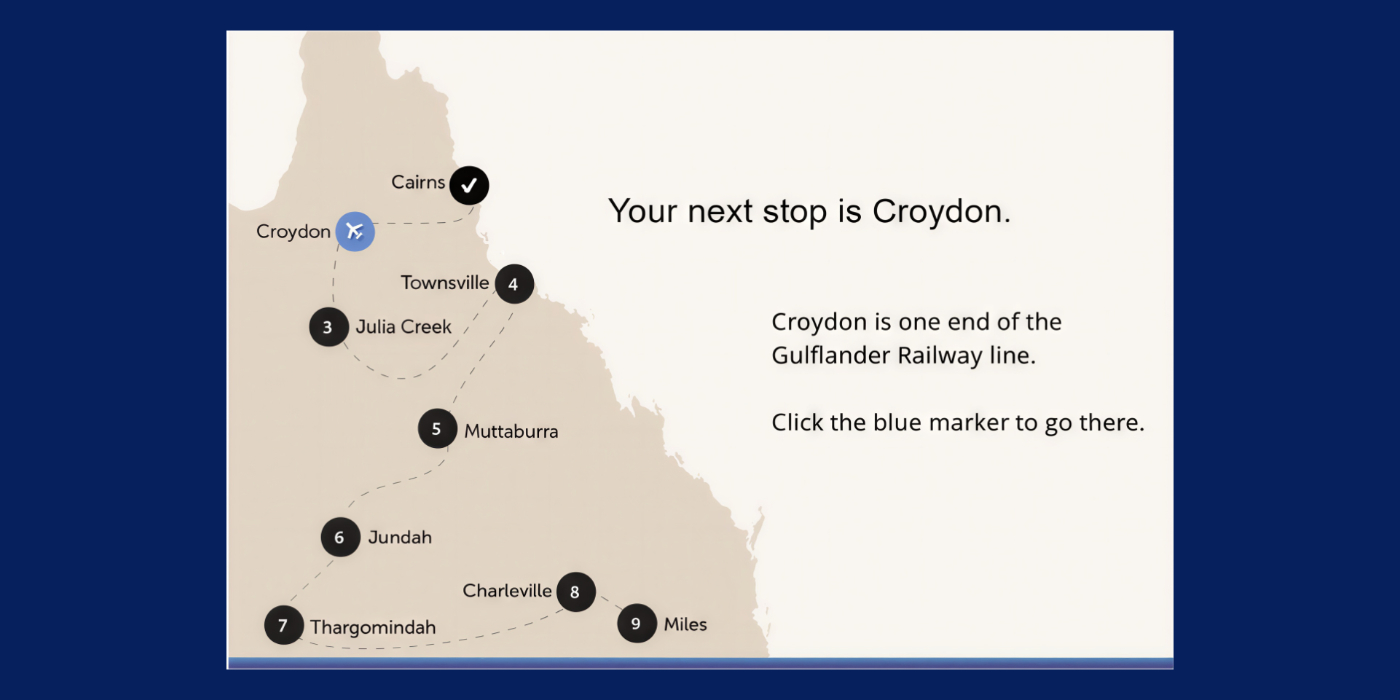
Navigation and progress
I designed custom navigation and progress tracking into each module. Learners would complete the content via a tour of Queensland locations. This provided a unique approach to progress measurement and a clear message that eLearning at the RFDS was evolving.
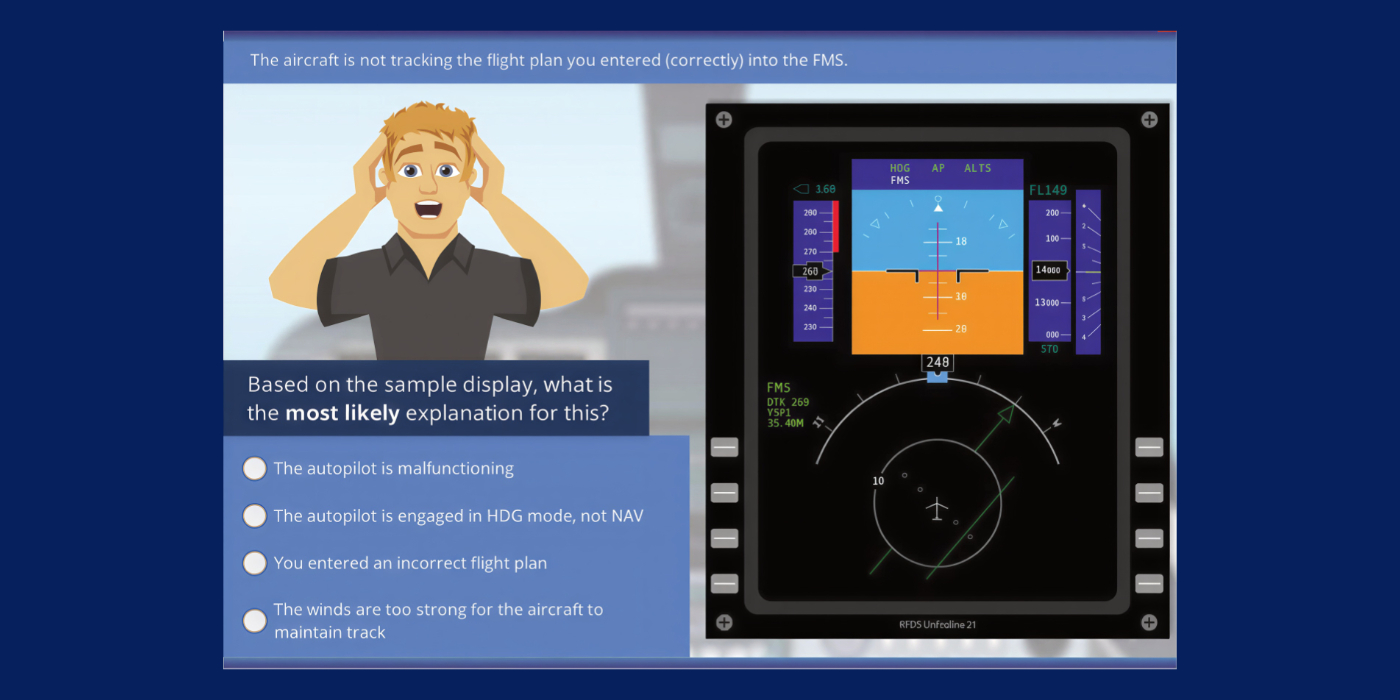
Contextualised
I was able to apply my aviation background to scenarios, providing context and relevance to pilots completing the program. Overall, I developed more than 40 scenarios for this program.