Portfolio
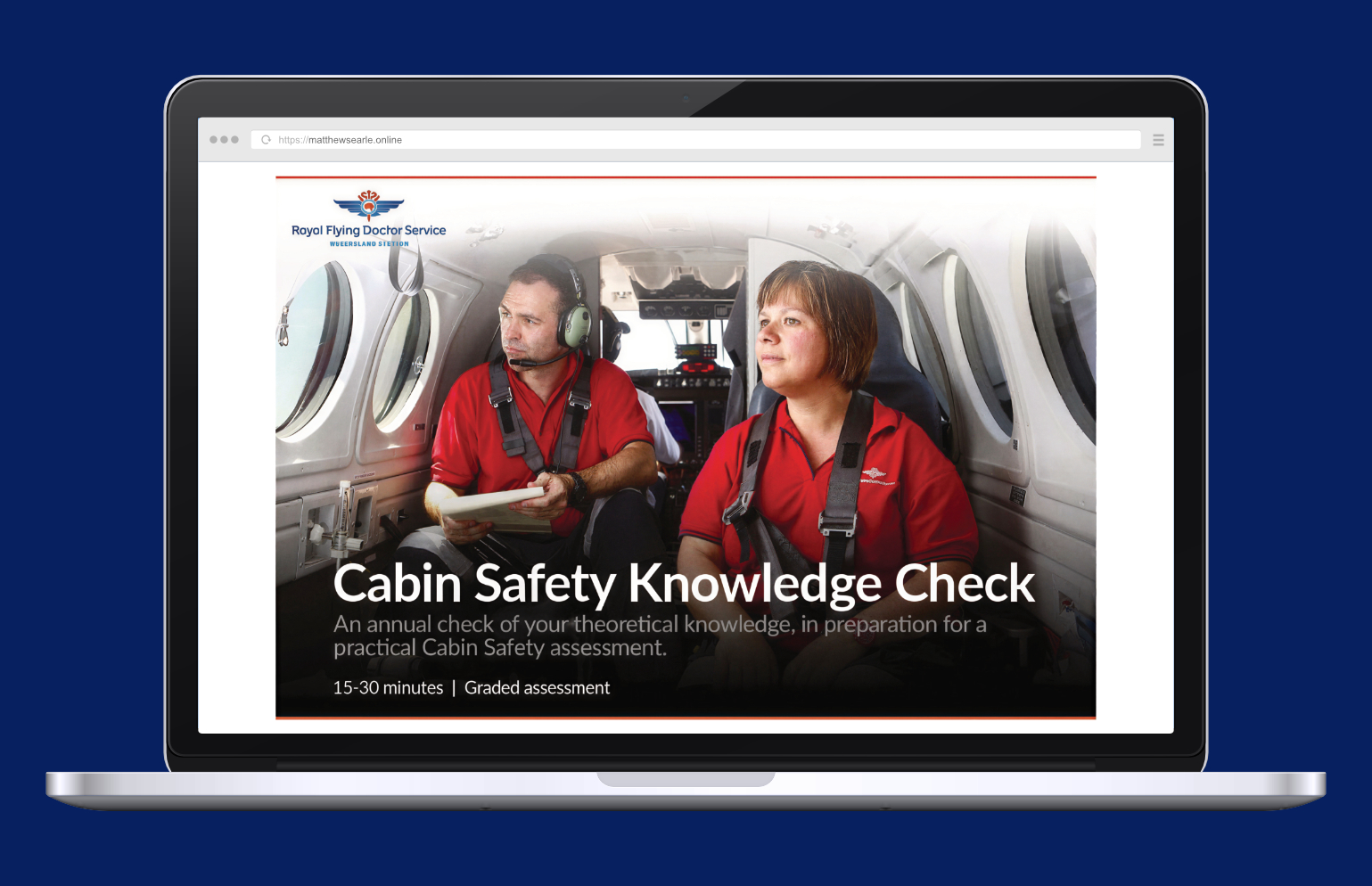
Cabin Safety Knowledge Check
eLearning
A fresh approach to recurrent training, including adaptive learning.
3
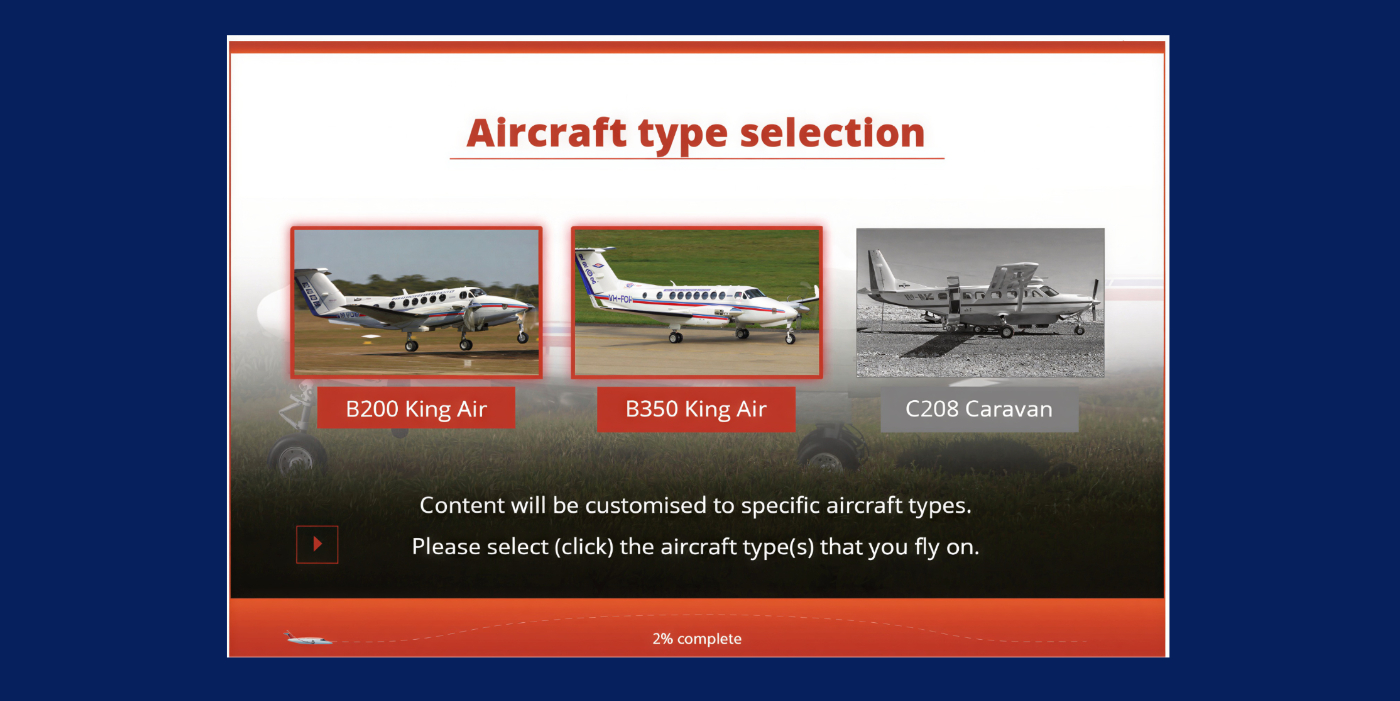
aircraft types
15-30
minutes
17K
in savings/year
About the project
The Brief
The RFDS Flight Standards team has regulatory responsibility for ensuring all RFDS operating crew (pilots, nurses and doctors) are provided with recurrent Cabin Safety training.
The topics covered include aircraft systems, communications, emergency response and aviation physiology.
The theory component had traditionally been delivered via ‘chalk and talk’ - a two-hour disengaging presentation, containing more than 150 slides of content that participants were already familiar with.
Based on a history of negative participant feedback and an appetite for change from the Flight Standards pilots themselves, I was engaged to develop an eLearning alternative.
The topics covered include aircraft systems, communications, emergency response and aviation physiology.
The theory component had traditionally been delivered via ‘chalk and talk’ - a two-hour disengaging presentation, containing more than 150 slides of content that participants were already familiar with.
Based on a history of negative participant feedback and an appetite for change from the Flight Standards pilots themselves, I was engaged to develop an eLearning alternative.
The Solution
This project represented a milestone in learning design at the RFDS and provided the catalyst for broader change and engagement by frontline staff in learning initiatives.
It started - like so many learning projects do - with a ‘simple’ request to turn a PowerPoint deck into a module. Through consultation with the team, I was able to better appreciate the true requirement - an assessment of prior knowledge.
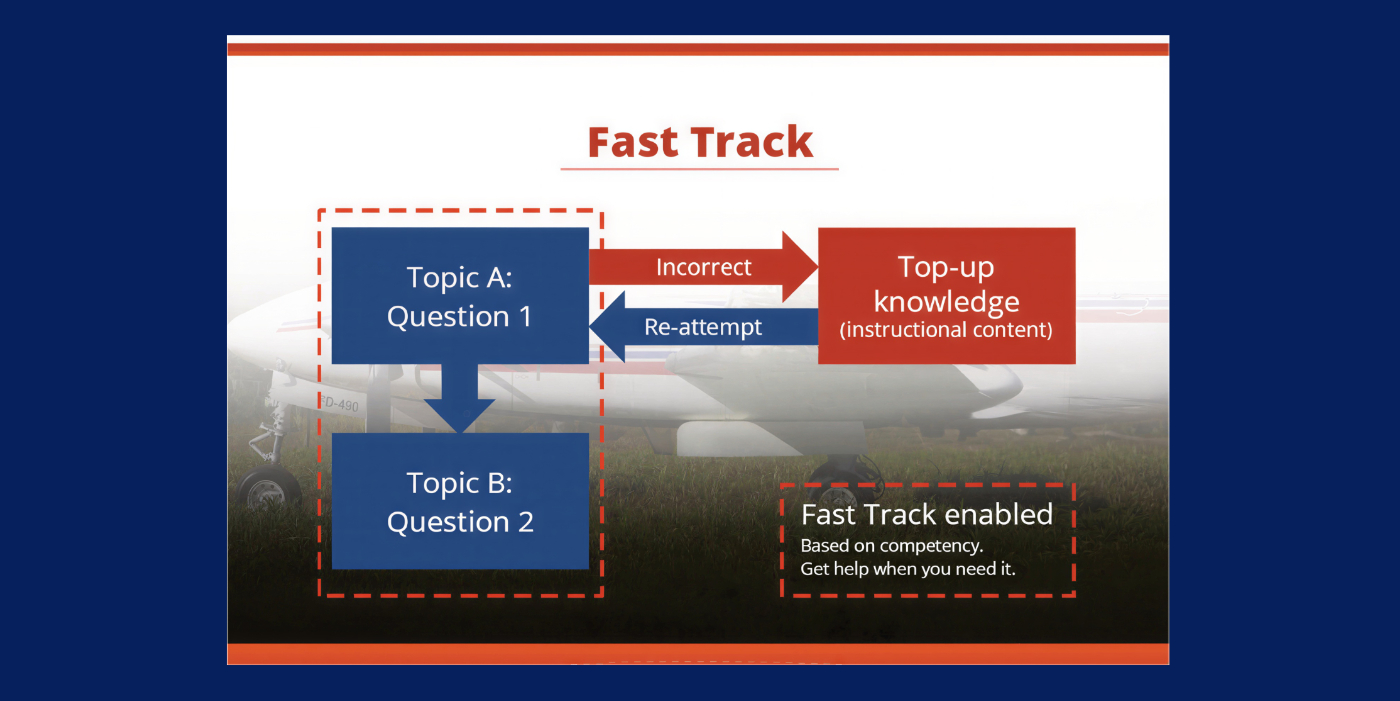
Based on my experience, I suggested a module that used an Adaptive Learning approach to assessment, which I branded ‘Fast Track’. This approach treats people as professionals and provides them with a ‘Fast Track’ through the content when they are able to demonstrate competency.
It has been praised by participants since its implementation and has saved the RFDS more than 17K per year compared to the old, ineffective solution.
It started - like so many learning projects do - with a ‘simple’ request to turn a PowerPoint deck into a module. Through consultation with the team, I was able to better appreciate the true requirement - an assessment of prior knowledge.
Based on my experience, I suggested a module that used an Adaptive Learning approach to assessment, which I branded ‘Fast Track’. This approach treats people as professionals and provides them with a ‘Fast Track’ through the content when they are able to demonstrate competency.
It has been praised by participants since its implementation and has saved the RFDS more than 17K per year compared to the old, ineffective solution.
Features
Fast Track
This was the solution that launched ‘Fast Track’ to the RFDS. If the learner answers a question correctly, they move to the next question/topic. If they answer a question incorrectly, they are provided with an instructional ‘top up’ before attempting the same topic again.
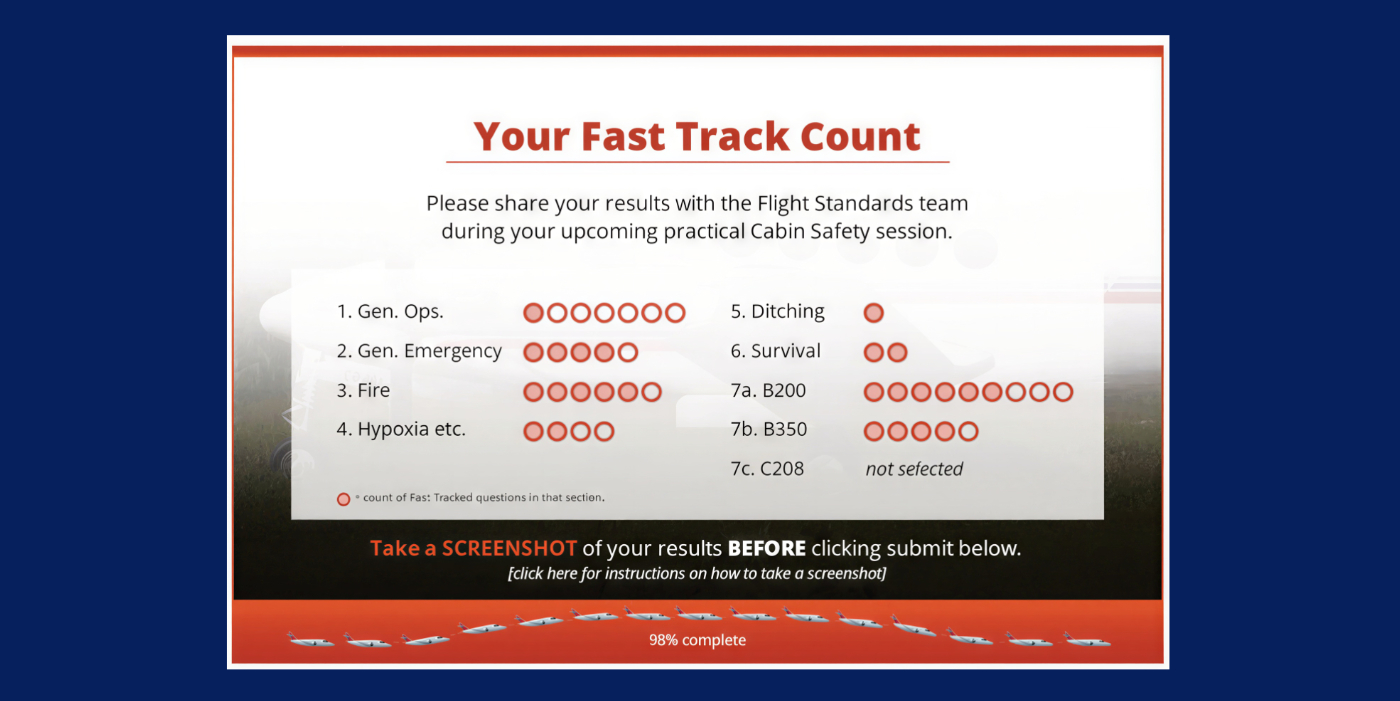
Performance analysis
Learners were presented with a visual summary upon completion of the module, showing their ‘Fast Track’ performance. This screen also allowed the Flight Standards Pilots to address potential competency gaps during the practical session.